
Bearing Failure Analysis: 8 Common Causes & Prevention Guide for Industrial Equipment (2026)
Understanding bearing failure analysis is essential for engineers, maintenance managers, and procurement professionals working with industrial machinery. Studies show that improper lubrication accounts for approximately 36% of all bearing failures, making it the single largest preventable cause in industrial settings. This comprehensive bearing failure analysis guide examines 8 common causes of bearing failure and provides actionable prevention strategies you can implement immediately.
Whether you are managing a mining operation in South America, a manufacturing plant in North America, or a processing facility in Europe, understanding bearing failure analysis helps prevent catastrophic equipment failures and reduce costly unplanned downtime. This guide helps engineers, maintenance managers, and procurement specialists identify failure risks early through systematic bearing failure prevention protocols.
Why Bearing Failure Analysis Matters for Industrial Operations
Industrial bearings are critical components in rotating machinery, and their failure can lead to expensive repairs, extended equipment downtime, and lost production. A single bearing failure in a conveyor system or crusher can cost tens of thousands of dollars in unplanned downtime. Regular bearing failure analysis helps identify problems before they become catastrophic failures.
Modern bearing failure analysis combines visual inspection, vibration analysis, and oil analysis to detect early warning signs. By implementing a systematic approach, plants can reduce bearing-related downtime by up to 50%.
Signs Your Bearings May Be Failing
- Unusual noise or grinding sounds from rotating equipment
- Elevated operating temperatures at the bearing housing
- Visible discoloration or surface wear on bearing components
- Increased vibration readings on condition monitoring equipment
- Metal particles in lubricant samples
The 8 Most Common Causes of Bearing Failure
Understanding the root causes of bearing failure is the first step in effective bearing failure analysis and prevention. Here are the 8 most common causes that bearing failure analysis professionals identify in industrial settings:
1. Improper Lubrication — The #1 Cause of Bearing Failure
Lack of lubrication or using the wrong lubricant is the leading cause of bearing failure, accounting for approximately 36% of all bearing failures in industrial applications. Insufficient lubrication creates metal-to-metal contact, generating excessive heat and causing rapid surface wear. Over-lubrication is equally problematic, as excess grease creates drag, generates heat, and can force seals to fail.
Effective bearing failure prevention through proper lubrication involves:
- Using the correct lubricant type and viscosity grade as specified by the bearing manufacturer
- Following OEM specifications for lubrication intervals and re-lubrication quantities
- Ensuring proper lubricant application — both over-greasing and under-greasing cause failures
- Storing lubricants in clean, sealed containers and regularly inspecting for contamination
- Implementing automatic lubrication systems for hard-to-reach bearing locations
For detailed lubrication best practices, see our Industrial Bearing Lubrication Guide.
2. Contamination — A Silent Bearing Killer
Dirt, dust, moisture, and foreign particles entering the bearing cavity cause abrasive wear that dramatically reduces bearing service life. Bearing failure analysis of contaminated bearings typically reveals scratches, dents, or surface spalling on raceways and rolling elements. Mining, quarrying, and agricultural operations are especially vulnerable due to their harsh environments.
Bearing failure prevention through contamination control:
- Install proper seals and shields on bearing housings — triple-lip seals for dusty environments
- Maintain clean work environment during bearing installation and handling
- Install filtration systems on lubrication circuits to remove particles
- Use clean tools, gloves, and protective clothing when handling bearings
- Implement contamination control protocols in bearing storage areas
3. Improper Installation — Preventable Damage
Incorrect mounting techniques can damage bearings during installation, leading to premature failure even when the bearing itself is correctly selected. Common installation errors include applying force through the rolling elements, using improper tools, and failing to achieve correct alignment. Bearing failure analysis of newly installed bearings often reveals installation damage as the root cause.
Proper bearing failure prevention during installation:
- Use proper bearing installation tools — hydraulic presses, induction heaters, and bearing pullers
- Never apply force to the bearing rings or rolling elements during installation — force should only go through the ring being pressed
- Follow torque specifications for mounting bolts on bearing housings and adapters
- Train maintenance personnel on proper bearing installation procedures and techniques
- Use anti-fretting compounds on bearing seats to prevent micromovement damage
Learn more about industrial bearing types and their proper installation.
4. Excessive Load — Overloading Beyond Rated Capacity
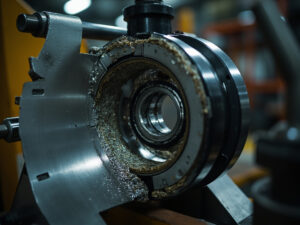
Overloading bearings beyond their rated dynamic load capacity causes premature surface fatigue, leading to spalling and eventual catastrophic failure. Static overloading occurs when equipment is subjected to loads exceeding the bearing’s static load rating. Dynamic overloading happens when operating speeds combine with high loads to exceed the bearing’s fatigue life. Proper bearing failure analysis should always evaluate load conditions against manufacturer ratings.
Bearing failure prevention for excessive load:
- Select bearings with adequate load ratings for your specific application — choose bearings with 20-30% higher rating than calculated load
- Consider shock loads, vibration, and impact forces in load calculations
- Use bearing selection software or consult with bearing engineers for critical applications
- Monitor load conditions regularly with pressure sensors and load cells
- Use tapered roller bearings or spherical roller bearings for combined radial and axial loads
5. Vibration and Shock Loads — Hidden Damage Sources
Excessive vibration and impact loads can damage bearing surfaces even when the bearing is correctly selected for the application. Shock loads create momentary pressure spikes that can cause brinelling (indentation damage) on the bearing raceway. Ongoing vibration can cause false brinelling — a form of wear damage that occurs at low vibration amplitudes but high frequencies.
Effective bearing failure prevention for vibration damage:
- Use vibration analysis equipment to detect early warning signs of bearing damage
- Ensure proper equipment alignment between motor, gearbox, and driven equipment
- Install shock-absorbing mounts and vibration dampening pads where necessary
- Balance rotating components to reduce vibration-induced bearing stress
- Use isolated bearing designs in high-vibration applications such as fans and pumps
6. Improper Storage — Failure Before Installation
Incorrect storage conditions can degrade bearing performance before they are even installed in equipment. Bearings are precision components that can be damaged by moisture, temperature extremes, chemical exposure, and physical handling. Bearing failure analysis on newly installed parts frequently reveals storage-related degradation as a contributing factor.
Bearing failure prevention through proper storage:
- Store bearings in original factory packaging until immediately before installation
- Keep storage areas climate-controlled: ideal temperature 5-25°C with relative humidity below 60%
- Rotate stock to use oldest inventory first — follow FIFO (First In, First Out) practices
- Never store bearings near chemicals, solvents, or cleaning agents
- Inspect incoming bearings for packaging damage and corrosion before accepting delivery
7. Temperature Extremes — Operating Outside Design Range
Operating temperatures outside the bearing’s rated temperature range cause material degradation, loss of hardness, and reduced load capacity. High temperatures cause lubricant oxidation, seal degradation, and material softening that accelerates wear. Low temperatures can cause lubricant viscosity to increase beyond design limits, resulting in inadequate lubrication on startup.
Bearing failure prevention for temperature extremes:
- Select bearings rated for your actual operating temperature range — not just the design maximum
- Use cooling systems such as oil baths, circulating oil, or forced-air cooling for high-temperature applications
- Use heating systems or pre-warming procedures for equipment starting in cold environments
- Monitor bearing temperatures continuously during operation using embedded sensors
- Use synthetic lubricants rated for extreme temperature ranges in challenging environments
8. Electrical Damage — Current Passing Through Bearings
Electric current passing through bearings creates electrical discharge machining (EDM) damage, resulting in fluting patterns on bearing raceways. This damage dramatically reduces bearing life and produces characteristic noise patterns. Electrical damage is common in variable frequency drive (VFD) applications, welding equipment, and systems with improper grounding.
Bearing failure prevention for electrical damage:
- Install insulated bearings (ceramic or hybrid types) in applications vulnerable to stray currents
- Ground all electrical equipment properly to prevent stray current pathways through bearings
- Install shaft grounding brushes or current diversion devices on VFD-driven equipment
- Use EMC filtering on variable frequency drives to reduce high-frequency voltage spikes
- Inspect for electrical damage patterns during routine maintenance and include in bearing failure analysis protocols
For high-performance applications, consider our ceramic hybrid bearings guide which offers superior electrical insulation.
Bearing Failure Prevention: Best Practices
Implementing a comprehensive bearing maintenance program significantly reduces failure rates across industrial operations. The following best practices apply across mining, manufacturing, processing, and general industrial applications.
Establish a Predictive Maintenance Program
A structured bearing failure analysis program is the foundation of effective prevention:
- Implement regular inspection and maintenance schedules based on operating hours and conditions
- Deploy predictive maintenance technologies: vibration analysis, ultrasound monitoring, and thermography
- Use oil analysis to detect wear particles and lubricant degradation early
- Track bearing temperatures using wireless sensors and IIoT platforms for real-time monitoring
- Review bearing failure analysis data quarterly to identify recurring failure patterns
Maintain Comprehensive Equipment Records
Documentation supports continuous improvement in bearing failure prevention:
- Keep detailed records of bearing installation dates, operating hours, and replacement history
- Document all bearing failure analysis findings including root cause and corrective actions
- Track operating conditions including loads, speeds, temperatures, and lubrication history
- Use CMMS (Computerized Maintenance Management System) to schedule bearing inspections
- Analyze historical failure data to optimize bearing selection for similar applications
Source Bearings from Reputable Suppliers
Quality bearing failure prevention starts with quality suppliers:
- Source industrial bearings from established manufacturers with documented quality systems
- Verify bearing authenticity — counterfeit bearings are a significant industry problem
- Request technical support from suppliers for critical applications and bearing selection
- Consider total cost of ownership, not just initial purchase price, when selecting bearing suppliers
- For specialized applications, work with suppliers offering custom bearing configurations
Related Bearing Guides
- Types of Industrial Bearings: A Complete Guide for Buyers — Understand bearing categories before making purchasing decisions
- Industrial Bearing Lubrication Guide — Master lubrication for maximum bearing life
- Industrial Bearing Maintenance Checklist — 20-point maintenance guide for extended bearing life
- Industrial Bearings for South America Mining — Sourcing guide for mining applications
- Top 5 Bearing Failure Causes — Quick reference guide for common failure modes
- Contact Our Technical Team — Get expert help with bearing selection and troubleshooting
Need help with bearing selection or troubleshooting?
A properly executed bearing failure analysis program can reduce your unplanned downtime by 50% or more. Our technical team supports industrial buyers worldwide with bearing selection, application engineering, and procurement services.
Contact our technical team: +86-18698853189
Email: [email protected]
Website: https://dhjintl.com